
Ada County Crime News Sources
Crime coverage in Ada County comes from a handful of local editorial desks rather than a single arrest bulletin. The Idaho Statesman crime section, KIVI/K7 News, KTVB, Idaho Press, and BoiseDev all publish selected stories covering Boise, Meridian, Eagle, and the wider Treasure Valley. Their feeds update when a reporter files a story. They do not update when a jail database refreshes.
Start any records search with official channels. The ACSO Current Arrests report covers a rolling window of bookings. The ACSO Inmate Roster shows current county custody. Boise Police news adds city-level announcements, while ACSO's social channels carry selected agency posts. None of these is a complete warrant, news, or booking archive. A story can supply context without telling you whether someone is still in custody or whether a charge held up in court.
Timing matters here. A story may run before a county interface lists anything. It may also stay online long after a roster entry disappears. Pay attention to dates, captions, agency credits, and court references rather than the headline alone. The same name can also surface in a secondary index pulling from many agencies. Trace any match back to the originating record before drawing conclusions.
Ada County Outlet Comparison
The comparison below separates official county records from editorial coverage. A listed photo option means an outlet may publish an image when it has one and chooses to run it. Plenty of arrests never get a story. Plenty of stories run without a booking photo.
| Outlet or source | Coverage pattern | Photo behavior | Best use |
|---|---|---|---|
| ACSO Current Arrests | Rolling 4-hour, 24-hour, and 5-day arrest windows. | A selected result can show an official booking image. | Recent processed arrest event, not guaranteed current custody. |
| ACSO Inmate Roster | Current Ada County Jail custody, with a 24-hour update warning. | A selected result may display an image; it is not a gallery. | Current listed county custody. |
| Idaho Statesman | Story-based crime and public-safety reporting across the Treasure Valley. | McClatchy policy stopped most crime mugshots; selected stories may differ. | Reporting, context, and court or agency references. |
| KIVI/K7 News | Regional stories published as news develops. | Selected stories may use an ACSO-attributed booking image. | Local incident context, not a mirror of the live roster. |
| KTVB | Boise and Treasure Valley crime and public-safety reporting. | Selective, story-specific image use. | News reporting and source-credit review. |
| Idaho Press | Regional local reporting with no dedicated booking-photo log located. | Selective photos with captions and source credit. | Local reporting and case context. |
| BoiseDev | Boise and Ada-area civic and public-safety stories. | Selective source images or law-enforcement releases. | Local reporting, not a complete arrest index. |
| Boise Police news | Official city releases and selected police information. | No fixed daily photo cadence located. | Boise agency context and source checking. |
| ACSO public-information channels | Selected agency posts and routine public-information topics. | No fixed booking-photo cadence found on ACSO social or public-information channels. | Agency updates, not a complete feed. |
Official county sources answer custody and recent-arrest questions. Local outlets answer different ones: which incidents got reported and why. The two overlap. Keep them distinct rather than merging both into a single claim about what actually happened.
How Ada County News Uses Photos
Idaho has no ordinary statute that requires or bans publication of booking photos. In practice, public-records rules, agency policy, source availability, and editorial choice shape what appears. ACSO policy lists routine arrest releases as a possible public-information topic. The Community Information Unit decides how often and for whom. A reporter might work from an agency release, file a records request, or publish without any image. Photos can also lag behind the booking itself. Image processing and online display are separate steps from intake.
Because of that pipeline, an image in a story proves little about the rest of the record. Read the caption and the credit. A story may carry an ACSO booking image, a source image, or nothing at all. The source views below show selective news treatment, not a photo archive.
The KTVB news section is a story stream, not a daily booking list. The section below helps show the outlet's context and its selective approach to Ada County crime coverage.
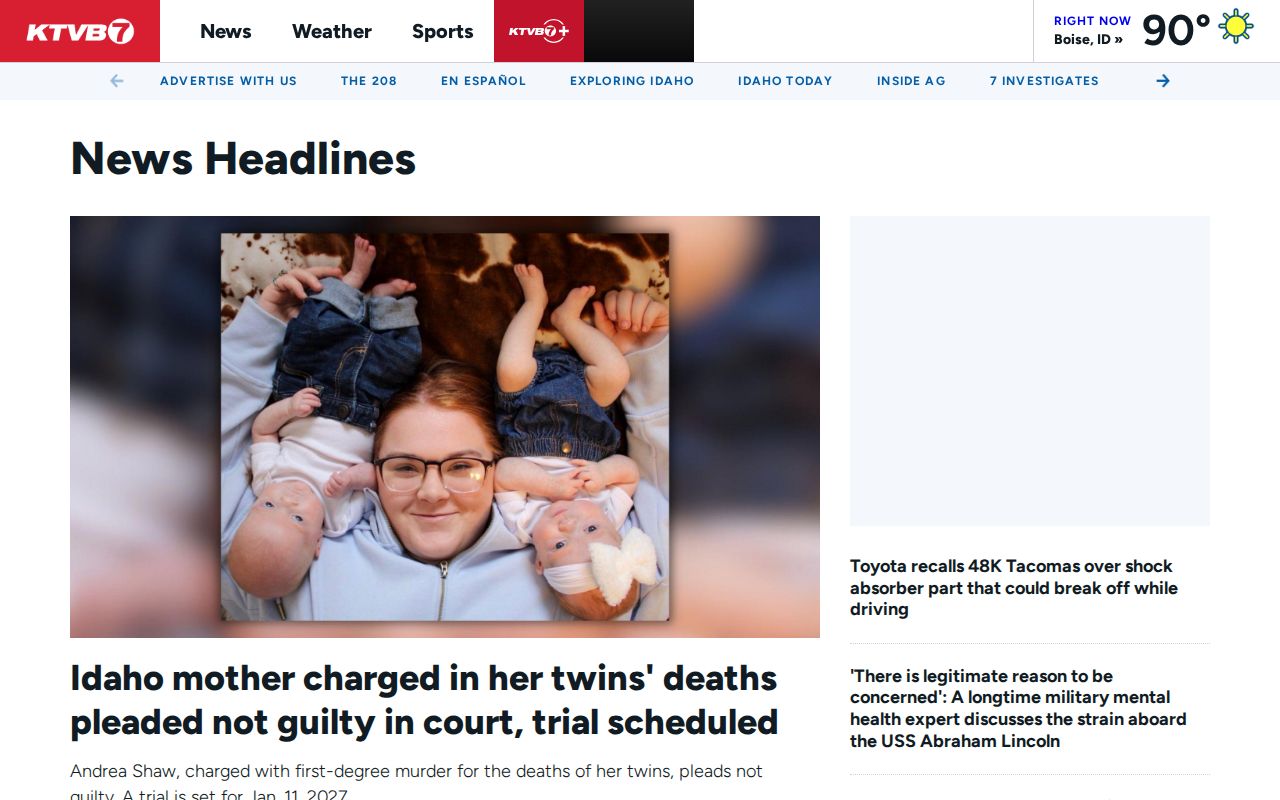
Read any KTVB story alongside its date, caption, and agency attribution. A photo's presence or absence says nothing about whether someone sits in the Ada County Jail right now.
KIVI/K7 News has run selected ACSO-attributed images in its crime stories. The image below illustrates that editorial path, where an official source gets credited for a particular report.
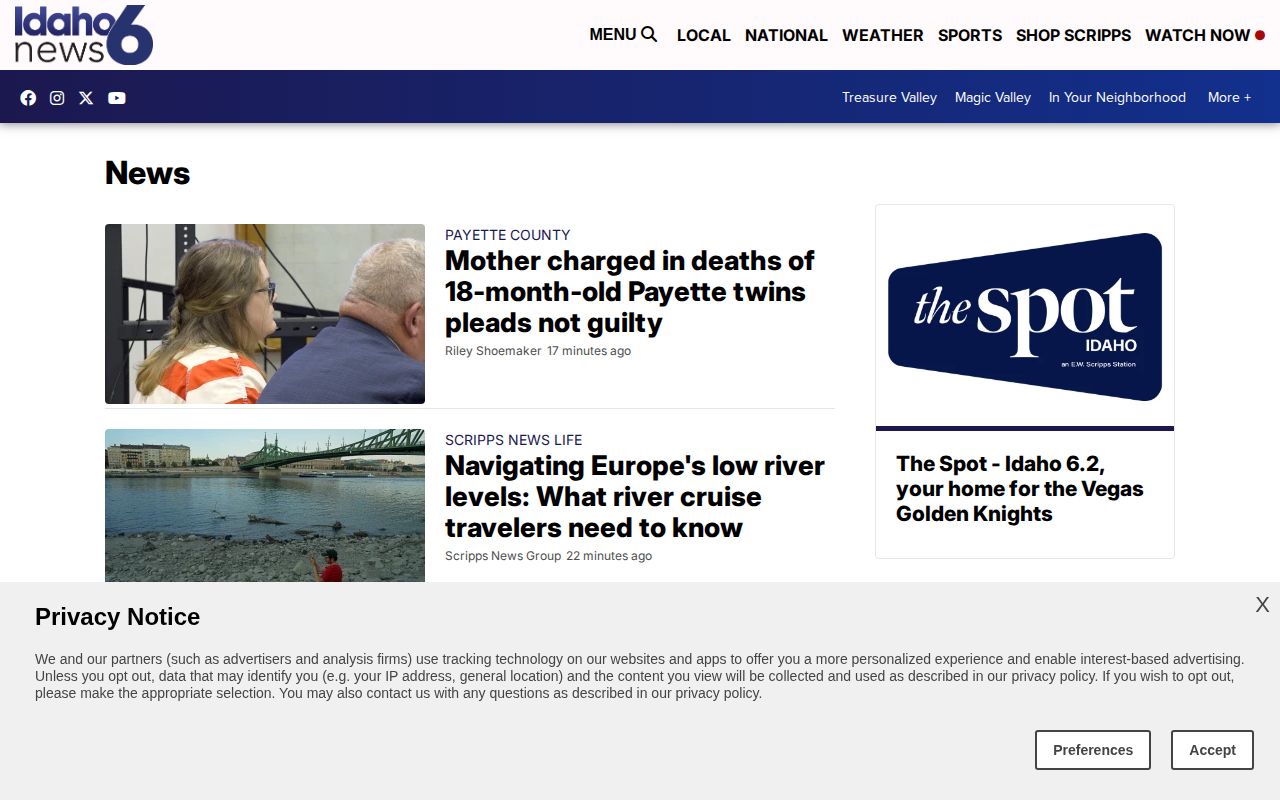
KIVI's choices remain selective. A technical delay or a later roster update can leave the article and the county interface looking different at any given moment.
The Idaho Press local section is another story-based source. Check each piece for its caption and source credit rather than treating the outlet as a photo log.
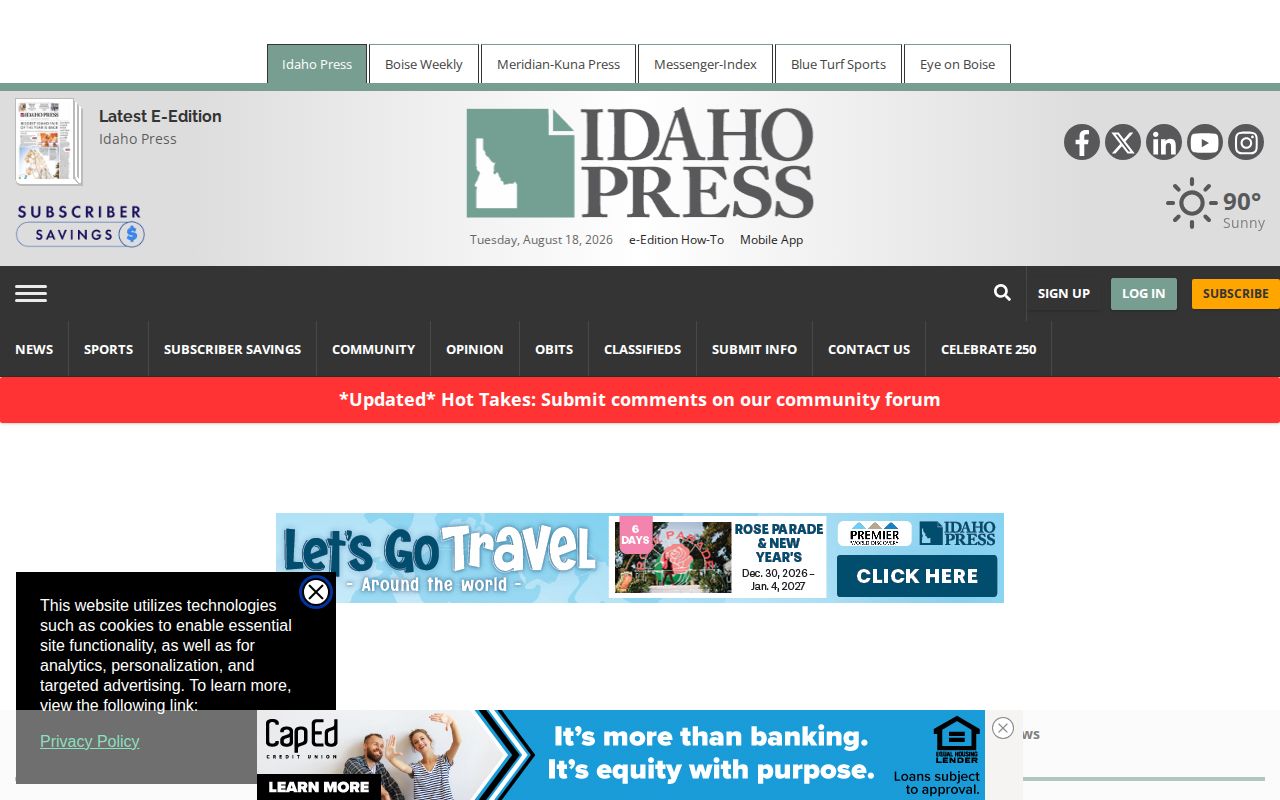
Idaho Press, KTVB, and BoiseDev can each cover the same county event in their own way. An agency-supplied image in one story does not create a complete photo trail across every outlet.
Unofficial Ada County Indexes
Secondary indexes serve one purpose well. They help you spot a date, a name spelling, or a lead worth chasing. They are not the ACSO roster. They are not an arrest report or a court file. Coverage can lag, run thin, or blend several agencies together. Treat anything copied from them as a lead until the official county source confirms it.
RecentlyBooked runs an unofficial Ada County index covering a rolling 30-day window, refreshed several times a day. Boise, Meridian, Eagle, and other city labels show up when the source record carries them. That labeling is convenience, not an official city feed. The 30-day span is no archive of every county booking. Keep the date and the unofficial tag attached to anything you copy from it.
Mugshots.com takes a different approach with its Ada County section, letting visitors browse by date or first letter of a name. City labels there include Boise, Eagle, Kuna, Meridian, Star, and more. The accumulated format explains why old items linger after a live roster has moved on. Still, a city label in that dataset proves nothing about which department made the arrest.
Arrests.org lists Ada County entries with names, photos, dates, charge and statute fields, and browsing tools. Look closely at the agencies behind its entries. ACSO, Boise City Police, Meridian City Police, Idaho State Police, Garden City Police, Boise County Sheriff, and Eagle City Police all appear. That mix is broad. It is why the site cannot stand in for an Ada County Jail feed, and why updates on any secondary service never change the county record itself.
Some sources simply do not cover Ada County. BustedNewspaper's Idaho landing page listed other counties but no Ada page, so inventing a URL would be a mistake. Mugshots.zone offered nothing that establishes Ada coverage either. Boise Busted does exist as another unofficial local source. Its own framing admits the coverage is incomplete, and its contact route guarantees no correction, response, or official result.
From Ada County Story to Record
A news story makes a fine starting clue, especially one that names an agency, a date, a charge, or a case number. From there, the trail depends on custody. A recent-arrest feed shows a processed event. The roster shows who is listed in county custody now. The court portal shows what happened after booking. The countywide Ada County booking and records path holds those pieces together.
Work the sequence this way when an article raises a records question:
- Save the article headline, publication date, person’s name, agency, incident date, and any case or booking reference. Treat the story as selected reporting, not as a complete index.
- Check ACSO Current Arrests. Its 4-hour, 24-hour, and 5-day choices cover recent processed arrest events. A result can change, and it does not guarantee that the person remains in custody.
- Check the ACSO Inmate Roster for current listed Ada County Jail custody. The roster excludes juveniles, updates every 24 hours, and warns that recent changes may not yet appear. An absent row does not prove release, dismissal, acquittal, or expungement.
- For an older booking record or photo that is not in the live interfaces, use the ACSO public-records request route. Describe the name, date, agency, case or incident number, and the specific record sought. The records unit can explain what is held and what may be exempt.
- Search Idaho iCourt for the case, hearing events, and disposition. Use the court’s records-access guidance when a document is not exposed in the ordinary search. Sealed or exempt material may not appear.
Stories and live records sometimes clash. Before assuming an error, compare the dates and the custody labels. A person can walk free while the case moves forward. A story can sit online long after a court result changes, since no one pulls old articles. A copied secondary record may simply be missing a later filing.
Ada County Editorial Patterns
Local news in Ada County follows two different rules. The Idaho Statesman reported that McClatchy papers adopted a 2020 policy against publishing most crime mugshots, so a Statesman crime story offers reporting and context but no expectation of a photo. Selected KIVI stories, meanwhile, have used ACSO-attributed images. The gap is editorial, not legal.
KTVB, Idaho Press, and BoiseDev also choose their stories selectively. Public interest, available sources, and editorial judgment drive what appears, not any complete jail export. Two outlets can cover the same event, and one will run an agency image while the other runs text alone. Whether a photo appears tells you nothing about the case itself.
This split is why an arrest-news search can feel lopsided. A high-interest case may draw several stories, while a routine booking shows up only in the ACSO interface. Missing coverage never erases a public record. A headline never replaces one either.
Ada County News by City
Adults processed into Ada County Jail land in county-level records no matter which city they came from, whether Boise, Meridian, or Eagle. News coverage ignores that boundary. Boise Police news is an official city source for selected Boise information, but a story label does not turn any outlet into a daily city booking log.
Secondary indexes muddy things further by attaching a city field to a county record or blending agencies across the Treasure Valley. That label can help you spot a likely item. It cannot tell you which department made the arrest or where the person sits now. Agency, booking path, and custody state each need their own check.
For a city event, begin with the official source named in the story. Ada County Jail processing points to the county arrest report and roster as the booking channels. A police incident report belongs with the responsible city records office. Local news can point you toward either, but it answers for neither.
Ada County Arrest News Limits
News coverage has built-in limits. A story can be corrected days later, or it can sit online long after the jail roster has changed. County systems lag too. Releases and transfers take time to show up, and a third-party index may only carry part of a booking record.
The safest order is simple. Start with the official arrest or custody source. Follow up with a records request if gaps remain, then check the court file for what happened next. That path keeps a mugshot lookup anchored to public records instead of a photo or a headline. It also leaves room for sealed files, juvenile exclusions, and the boundaries between agencies.